

TonyMix played to a half-full room. T-Vice drew thin crowds in Worcester. Kai braced for an undersold House of Blues. This is what happened, the carnival’s history, and why TPS is the most plausible explanation on the table.
Boston’s 53rd annual Caribbean Carnival returned to Franklin Park this weekend, and by most accounts the carnival itself remained a major regional draw — state estimates put historical attendance for the full day’s festivities at 500,000 to 800,000 across the J’Ouvert parade, the Grand Parade down Blue Hill Avenue, and the Franklin Park festival. But inside that broader picture, this year’s Haitian-specific carnival-weekend concert circuit told a noticeably different story: thin crowds at multiple headline shows by some of compas music’s biggest names, across three different nights and three different venues.
What Happened, Show by Show
Friday night at Ann’s Palace in Brockton, a venue capable of seating 650 to 800 guests depending on configuration, TonyMix took the stage — but the room did not fill. That same Friday, August 28th, in Worcester — a considerable drive from Boston proper — T-Vice, one of Haitian compas music’s most established touring acts, played to a similarly light turnout. Saturday at the Boston Caribbean Festival itself, TonyMix performed again, but the crowd’s energy and size reportedly did not match the prior night’s showing, itself already below expectations. And Saturday night at Citizens House of Blues in Boston, Kai took the stage with organizers not anticipating a full house.
Four shows, three artists, three nights, and a consistent pattern: attendance below what these acts — TonyMix and T-Vice in particular are consistent draws throughout the Haitian diaspora’s East Coast circuit — would typically be expected to pull during the single biggest Caribbean cultural weekend of the Boston summer.
The History That Makes This Notable
Boston’s Caribbean Carnival dates to 1973, when Ken Bonaparte Mitchell founded the Caribbean American Carnival Association of Boston (CACAB) with support from then-Mayor Kevin White. J’Ouvert — French Creole for “daybreak” — is the carnival’s pre-dawn opening ritual, rooted in 18th-century Trinidadian traditions of formerly enslaved people celebrating freedom through music, paint, and costume at first light. In Boston, J’Ouvert has moved locations in recent years — this marked the third year the early-morning parade launched from Morton Street near Shattuck Hospital rather than its earlier route, a change organizers and Boston Police made specifically to reduce disruption in residential neighborhoods, following incidents including shootings at past J’Ouvert celebrations in 2023 and 2024.
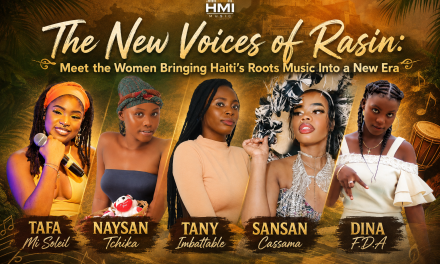
Haiti has long been part of this carnival’s fabric alongside Trinidad, Jamaica, Barbados, and the wider Anglophone Caribbean — the carnival’s own promotional materials explicitly list Haiti among the cultures showcased through food, music, and craftsmanship each year. Haitian compas artists performing carnival-weekend after-parties and standalone concerts has become its own parallel tradition: last year’s carnival weekend, for instance, featured a “KANAVAL WEEKEND After Party” headlined by T-Vice, TonyMix, and PDous at Boston’s Wonderland Ballroom — suggesting this year’s lineup and format follows an established, previously successful pattern. That history makes this year’s comparatively soft turnout a genuine departure worth investigating, not simply ordinary variance.
Is TPS the Reason? The Evidence Is Substantial
Massachusetts is home to an estimated 45,000 TPS holders, with Haitians constituting the largest single group. Following the U.S. Supreme Court’s June 2026 ruling in Mullin v. Doe and Haiti’s TPS termination taking effect July 27, 2026, Boston-area reporting has documented, extensively and specifically, exactly the phenomenon that would explain reduced turnout at large, publicly visible Haitian gatherings this carnival weekend:
- The Boston Globe reported directly that some Haitian community members have stopped attending church and started avoiding public spaces altogether since the TPS ruling, with the Association of Haitian Women in Boston’s adult education coordinator, Charline Melon, describing clients who are “worried about leaving their homes,” with one client reporting that “if they see a truck, they are afraid — they’re ducking, they’re running, they have paranoia.”
- Rev. Eno Mondesir, senior pastor at the Haitian Baptist Church of Cambridge, told the Globe he knows a TPS-holding minister “apprehensive about going out in public” even while still attending church — and described persistent community rumors of ICE agents poised to “infest the community.”
- At a July 23, 2026 City Hall Plaza rally for a TPS extension bill, Boston City Councilor Ruthzee Louijeune — the first Haitian-American elected to the council — explicitly noted the rally itself was likely smaller than it should have been precisely because of this dynamic: “We must have hope for the TPS holders who would like to be here but cannot be here because of fear.” Fellow attendee Wisette Albert made the same point more bluntly, saying she showed up specifically to reach “everybody that is hiding in the basement, under the bed, wherever.”
- Carline Desire, executive director of the Association of Haitian Women in Boston, told Boston.com the fear “is affecting everyone” across the community “whether we’ve been here for decades… or even grandchildren who were born here with Haitian grandparents” — indicating the chilling effect on public presence extends beyond TPS holders themselves to the broader Haitian-American community around them.
- Pathway for Immigrant Workers, a Boston legal-aid organization, documented in its own client communications that confusion and fear around TPS enforcement led some employers to terminate Haitian workers even before any deadline legally required it — evidence of how quickly and broadly the chilling effect spread through Haitian community life in Massachusetts this year, beyond any single legal technicality.
This is not a novel or one-off dynamic specific to this carnival weekend — it’s a documented, monthslong pattern Boston-area outlets have tracked since the Supreme Court ruling, affecting church attendance, employment, and public rallies alike. A predominantly Haitian concert crowd — publicly visible, ticketed, gathering in enclosed venues where identification might reasonably be checked at the door — fits squarely within the category of public activity community members and organizers have explicitly described avoiding.
What This Report Cannot Confirm
In fairness to a complete picture, this report cannot establish TPS fear as the sole or even primary cause with certainty, and a few competing or contributing factors deserve acknowledgment:
- No promoter, venue, or artist has publicly attributed this weekend’s turnout specifically to TPS as of this report — the connection drawn here is inferential, built from the documented broader pattern of Haitian public-space avoidance in Massachusetts, not from a direct statement tying these specific shows to that cause.
- Geographic and logistical factors are real complicating variables. Worcester is roughly 45 minutes to an hour from Boston’s core Haitian population centers (Mattapan, Dorchester, Hyde Park), and a Friday night show there competing against carnival-weekend logistics generally could plausibly depress turnout independent of any immigration-related fear.
- Multiple competing events on the same nights — TonyMix, T-Vice, and Kai all performing within roughly 24-48 hours of each other across three different venues — may have simply split a finite audience across too many simultaneous options, a promotional and scheduling issue distinct from community-wide fear.
- Ticket pricing, marketing reach, and general concert-industry softness are alternative explanations this report has not independently verified against these specific shows.
The Bottom Line
Boston’s Caribbean Carnival itself appears to have proceeded largely as scheduled, drawing its traditional broad, pan-Caribbean crowd to Franklin Park. But the Haitian-specific concert circuit that has historically run alongside it — TonyMix, T-Vice, and this year Kai — saw a turnout pattern that stands out against both the carnival’s own scale and last year’s comparable after-party lineup. Given the extensively documented, monthslong pattern of Haitian Massachusetts residents avoiding exactly this kind of large, publicly visible gathering since TPS termination took effect in late July, TPS-related fear is a genuinely plausible and well-evidenced contributing factor — one substantiated by named community leaders, elected officials, and legal-aid organizations describing the identical phenomenon in other public settings across the same weeks. It is not, however, a confirmed or exclusive cause, and this report treats it as the most likely explanation available rather than an established fact.
Sources: Boston Globe, GBH News, Boston.com, CSMonitor, CNN, Boston.gov, Festivals in America, Wikipedia (T-Vice). This report distinguishes documented community patterns from event-specific inference throughout; no promoter or venue has publicly confirmed TPS fear as a direct cause of this weekend’s attendance.