

The KLASS maestro’s emotional reaction to the death of 20-year-old Pierre Damas Bel deserves to be heard. But his words also raise a larger question: when prominent Haitian artists condemn the country’s political and economic elites, do they recognize that cultural influence, wealth, access and celebrity can create another form of elite power—and another form of responsibility?
By Haiti Politic | Opinion & Cultural Politics
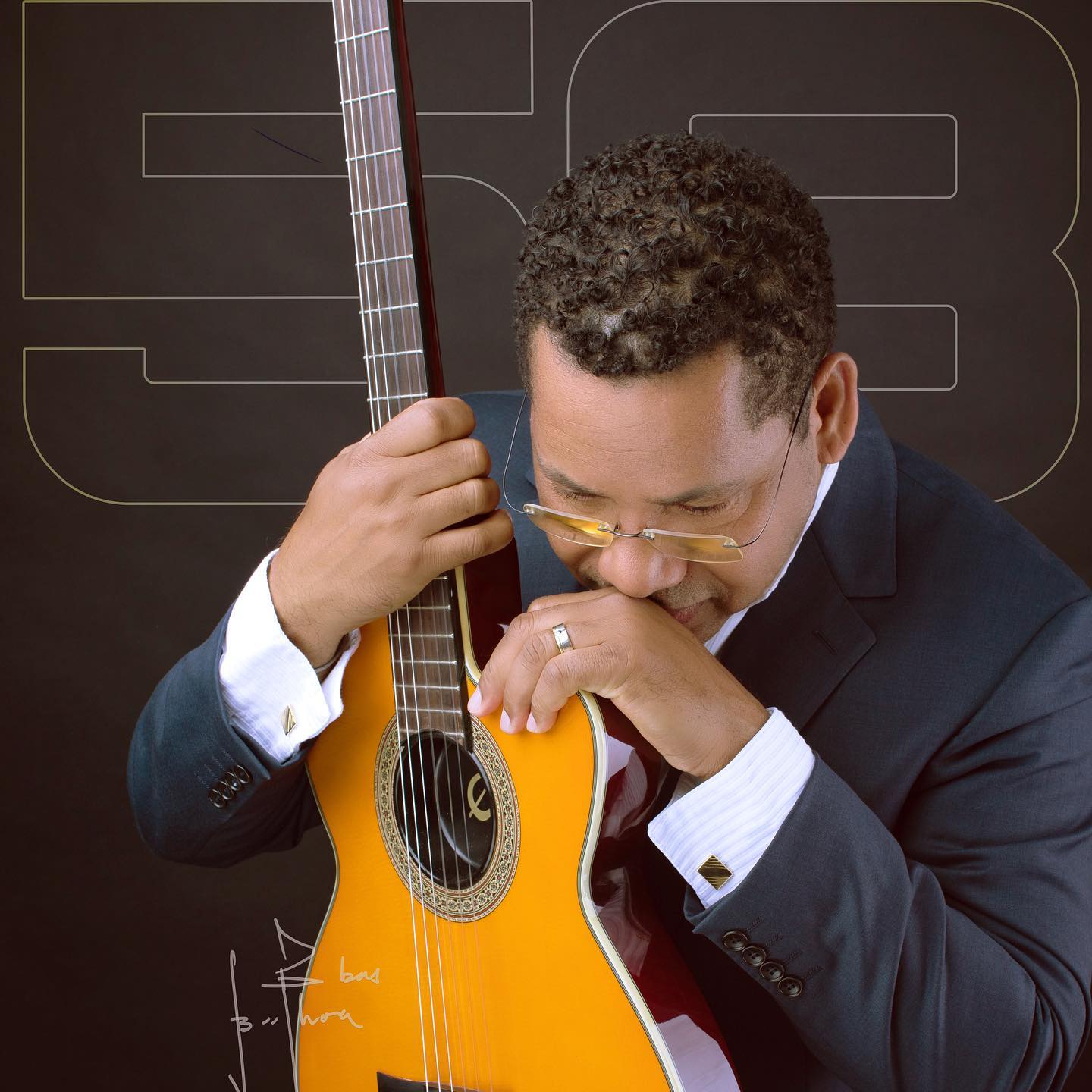
Richard Jean Hérard—better known throughout Haitian music as Richie, maestro and drummer of KLASS—is not an ordinary Haitian citizen with an ordinary microphone.
He is one of the most established musicians of his generation.
His career stretches across decades of Haitian popular music, from Zenglen to the creation and leadership of KLASS. His own band’s website identifies him as its maestro and drummer, while profiles of his career document his work as a composer, arranger, producer and musical director.
That distinction becomes important when examining a message posted by KLASS’s account following the death of Pierre Damas Bel, the 20-year-old Haitian student whose death in Ohio has generated grief and political controversy within the Haitian diaspora.
The post reads:
“Jeune homme sa a te ka youn nan pitit nou…
Mèsi Haiti
Mèsi Bandit 💔🇭🇹Say his name #PierreDamas”
Translated loosely:
“This young man could have been one of our children. Thank you, Haiti. Thank you, bandits.”
Those are powerful words.
They are also political words.
And they deserve a political response.
First, Richie Is Right About Something Important
Pierre Damas Bel’s death should trouble Haitians.
Bel was a 20-year-old Haitian student in Ohio. His family has said that the psychological distress he experienced after being placed under immigration monitoring, including an ankle monitor, contributed to his deteriorating mental state. ICE has disputed attempts to attribute responsibility for his death to the agency, and authorities have said the circumstances remain under investigation.
His story has become connected to the much larger anxiety surrounding Haitian immigration status in the United States.
So when Richie writes:
“Jeune homme sa a te ka youn nan pitit nou” — “This young man could have been one of our children”
there is something deeply human in that statement.
Richie is a father speaking to other parents.
An artist speaking to his community.
A Haitian looking at another young Haitian life cut short.
That deserves respect.
But then comes the second part:
“Mèsi Haiti. Mèsi Bandit.”
And that’s where the conversation becomes more complicated.
Who Exactly Is “Haiti”?
When we say:
“Thank you, Haiti.”
Who are we talking about?
The woman selling food on the sidewalk?
The teacher who hasn’t received a proper salary?
The farmer?
The university student?
The police officer?
The politician?
The businessman?
The diaspora?
The gang leader?
The musician?
The promoter?
The journalist?
The wealthy family?
The international community?
The Haitian elite?
All of them?
This is one of the problems with how Haitians sometimes discuss Haiti’s collapse.
We transform a complicated system of responsibility into a single villain called “Haiti.”
But countries don’t make decisions.
People do.
Institutions do.
Governments do.
Business networks do.
Political organizations do.
Armed groups do.
International actors do.
And influential citizens do.
That includes people with cultural power.
The Uncomfortable Question for Richie: What Is an Elite?
This is where Haiti Politic would respectfully challenge the maestro.
When Haitians hear the word “elite,” they usually imagine only one thing:
A tiny group of extraordinarily wealthy families.
Import monopolies.
Politicians.
Bankers.
Industrialists.
People living behind enormous gates in Pétion-Ville.
Certainly those forms of elite power exist and deserve scrutiny.
But sociology gives us a broader concept of power.
There are economic elites.
There are political elites.
There are intellectual elites.
There are media elites.
And there are cultural elites.
By that broader definition, someone can be outside Haiti’s traditional oligarchy while still occupying an extraordinarily privileged position within Haitian society.
And Richie should seriously consider whether he belongs to that category.
Richie Is Not Just a Musician Anymore
Richie’s influence is substantial.
He has spent decades building a career in Haitian popular music. His contributions as drummer, composer, producer and arranger have been widely recognized, and KLASS became one of the prominent bands in the modern konpa marketplace.
That creates cultural capital.
When Richie speaks, thousands listen.
When KLASS releases music, audiences across countries hear it.
When Richie appears on stage, promoters sell tickets.
When he expresses an opinion about Haiti, that opinion travels farther than the opinion of the average Haitian citizen.
That is power.
Not presidential power.
Not military power.
Not necessarily oligarchic power.
Cultural power.
And cultural power comes with responsibility.
You Can Be Part of the Elite Without Being Part of the Oligarchy
This distinction is essential.
Calling Richie part of Haiti’s cultural elite should not be interpreted as accusing him of causing Haiti’s political collapse.
There is no evidence for such a claim, and that would be unfair.
Nor does success make someone guilty.
Haitians should celebrate successful Haitian musicians.
The country needs successful artists.
Successful entrepreneurs.
Successful doctors.
Successful athletes.
Successful writers.
Successful businesspeople.
The problem isn’t success.
The question is what influential people do with the influence success gives them.
And that’s where Richie’s statement should become the beginning of a conversation rather than its conclusion.
If the Elite Failed Haiti, Where Was the Cultural Elite?
For decades, Haitian musicians have described the country’s suffering.
They’ve sung about corruption.
Poverty.
Migration.
Political betrayal.
Violence.
Social inequality.
The diaspora.
Broken relationships between Haiti’s social classes.
Sometimes brilliantly.
But there is another question worth asking:
Has the Haitian music industry itself built the institutions necessary to exercise sustained civic power?
Where is the powerful national musicians’ association?
Where is the HMI policy institute?
Where is the permanent Haitian music foundation financing young musicians?
Where are the scholarships?
Where are the organized voter-education campaigns?
Where are the music-industry lobbying organizations demanding copyright enforcement?
Where is the cultural preservation endowment?
Where are the artist-led institutions working year-round—not simply after a massacre, earthquake or political crisis?
Where is the coordinated HMI investment in music education inside Haiti?
This criticism isn’t directed exclusively at Richie.
It applies to the entire Haitian cultural establishment.
Artists cannot complain endlessly about failed institutions while refusing to build institutions themselves.
Celebrity Activism Cannot End With a Tweet
Posting about Pierre matters.
Saying his name matters.
Expressing grief matters.
But imagine what happens if Haiti’s most influential musicians go further.
Imagine Richie.
Arly Larivière.
Michael Guirand.
Gazzman Couleur.
Joé Dwèt Filé.
Réginald Cangé.
Bedjine.
Wendyyy.
TonyMix.
And other influential Haitian artists deciding that cultural leadership requires institutional leadership.
Not endorsing politicians.
Not becoming political candidates.
Building something independent.
A Haitian Artists Civic Foundation.
Imagine every major Haitian concert voluntarily contributing a small percentage toward education, mental-health resources, cultural preservation or youth programs.
Imagine artists funding scholarships.
Imagine Haitian stars registering young voters.
Imagine musicians using their platforms to explain constitutional reform.
Imagine an independent artists’ coalition demanding financial transparency from Haitian governments.
Imagine HMI artists refusing to perform at political events financed with questionable public money.
That would be cultural power transformed into civic power.
And Richie Has Already Demonstrated Something Important
There is evidence that Richie understands the symbolic influence artists possess.
In July 2026, Richie and fellow maestro Arly Larivière publicly reconciled after years in which they had been portrayed as major rivals within Haitian music. Richie honored Arly’s contribution, Arly reciprocated and apologized publicly, and the two embraced before the audience.
That may appear unrelated to Haitian politics.
It isn’t.
Because Haiti suffers from precisely the opposite phenomenon:
People who cannot reconcile.
Political factions that cannot compromise.
Business competitors who become enemies.
Artists divided into camps.
Politicians treating negotiation as surrender.
Organizations splitting endlessly.
If two of Haitian music’s most prominent figures can say:
We competed.
We disagreed.
But I recognize your contribution.
That is a small example of something Haiti desperately needs.
“Mèsi Bandit” Is Emotionally Powerful—but Politically Incomplete
Gang violence has devastated Haitian communities.
There should be no euphemism about that.
But simply saying “bandits destroyed Haiti” doesn’t explain how Haiti reached this point.
Who financed armed groups?
Who provided weapons?
Who provided ammunition?
Who benefited politically?
Who benefited economically?
Who allowed neighborhoods to become abandoned by the state?
Who dismantled institutions?
Who profited from contraband?
Who tolerated corruption?
Who manipulated desperate young men?
Who failed to provide education and employment?
Who looked away?
And what international systems enabled weapons and money to continue circulating?
Those are political questions.
And they are harder than:
“Mèsi bandit.”
Pierre Damas Bel’s Story Is Also More Complicated Than Haiti Alone
There is another reason to be careful.
Pierre died in the United States.
His family’s account connects his despair in part to his immigration situation and the humiliation he reportedly experienced after being placed under electronic monitoring. ICE confirmed that he had been fitted with an ankle monitor while immigration proceedings continued, while rejecting efforts to blame the agency for his death.
So Pierre’s tragedy intersects with several different realities:
Haiti’s insecurity.
Migration.
American immigration policy.
Diaspora identity.
Social isolation.
And mental health.
It would therefore be too simplistic to reduce his death to:
Haiti + gangs = Pierre’s death.
Human lives are more complicated than political slogans.
Richie Should Keep Speaking
Haiti Politic’s response isn’t:
“Richie, shut up.”
Quite the opposite.
Richie should speak more.
But with influence comes the obligation to go deeper.
Don’t only tell Haitians that Haiti failed.
Ask who failed Haiti.
Don’t only condemn the elite.
Ask what elite means.
Don’t only blame politicians.
Ask what Haiti’s musicians, businesspeople, diaspora professionals, churches, universities, media organizations and cultural leaders could have done differently.
And most importantly:
Ask what they can do now.
Perhaps Richie Is Part of the Elite—and That’s Not an Insult
Maybe that’s the conversation Haiti needs.
Being elite shouldn’t automatically be a condemnation.
It should describe capacity.
You have resources.
You have access.
You have education.
You have networks.
You have an audience.
You can get a phone call returned.
You can walk into rooms ordinary people cannot.
You can raise money.
You can influence public opinion.
You can mobilize thousands of people.
The problem isn’t that Richie may belong to Haiti’s cultural elite.
The question is whether Haiti’s cultural elite recognizes the responsibilities that come with that status.
Because Haiti doesn’t need successful people pretending they have no power.
Haiti needs successful people using their power responsibly.
From “Mèsi Haiti” to “Kisa Nou Pral Fè?”
Richie’s post begins with grief.
It should end with responsibility.
Instead of stopping at:
“Mèsi Haiti. Mèsi Bandit.”
Haiti Politic would add another sentence:
“E nou menm ki gen enfliyans, kisa nou pral fè?”
And those of us who have influence—what are we going to do?
That’s the question for politicians.
For business leaders.
For journalists.
For churches.
For the diaspora.
For wealthy families.
For academics.
For artists.
And yes—
for Richie too.
Pierre Damas Bel’s name deserves more than another round of Haitians blaming one another.
His death should force a more difficult conversation about why young Haitians continue to believe their future lies anywhere except the country where they were born—and what every Haitian with influence is prepared to do about it.
Richie was right about one thing:
Pierre could have been one of our children.
But if that is true, responsibility cannot belong only to “Haiti” and “bandits.”
It belongs, in different degrees and in very different ways, to everyone with the capacity to influence what Haiti becomes next.
And Haiti’s cultural elite cannot exempt itself from that conversation.
HAITI POLITIC — Analyze. Inform. Empower.
Editor’s note: This is an opinion and cultural-political analysis. Describing Richie as part of a “cultural elite” refers to public influence and standing within Haitian music, not an allegation that he belongs to Haiti’s economic oligarchy or bears responsibility for gang violence. Reporting on Pierre Damas Bel’s death should also recognize that suicide is complex and generally cannot responsibly be attributed to a single event or actor. In the United States, people experiencing a suicidal or mental-health crisis can call or text 988.