

A career anniversary offers more than an opportunity to display success. It offers a chance to explain what that success means—and who has lived through the journey.
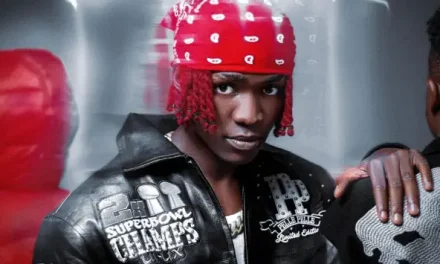
Rutshelle Guillaume’s 12 ERA opening at MGM Music Hall at Fenway had the ingredients for anticipation: a screen above the stage, career imagery and a transition into dramatic red lighting. Yet the supplied audience recording leaves a more difficult question unanswered: what emotional journey was this concert asking its audience to take?
As visual storytelling, the opening feels closer to a career showcase than a statement of purpose. It establishes the performer’s public image more clearly than the personal stakes behind the anniversary. For a solo artist marking twelve years, that is a missed creative opportunity.
Achievements need a narrative
An opening film has several jobs. It focuses a restless room, establishes a theme and gives the artist’s entrance meaning. Performance highlights and recognition can help, but accumulation alone does not create a story. Viewers need a thread connecting the images: a struggle, a relationship, a promise or a change.
The montage visible in this recording moves through artist and performance imagery before the stage shifts into its entrance lighting. That creates spectacle. It gives less visual space to a sustained personal relationship that could make the celebration feel intimate.
The concern with an awards-led approach—including the emphasis on Trace Awards raised in the discussion of this intro—is one of balance. Recognition belongs in an anniversary retrospective. But an award becomes dramatically useful when the film explains what it represents. Who shared the sacrifice? What changed along the way? What remains unfinished?
A trophy can establish professional standing. It cannot, by itself, supply the emotional purpose of an entire concert.
Motherhood could have supplied that thread
One compelling direction would have been Rutshelle’s experience as a mother. A concert built around twelve years of public life could explore the private responsibilities that continued alongside the music.
A carefully chosen moment involving Wawa, identified by the requester as her firstborn child, could have given the opening a different center of gravity. With both comfortable participating, a photograph, a brief message or a shared memory could connect artistic ambition to a relationship beyond the stage.
Such a sequence would need substance. Simply adding a child’s photograph between performance clips would not automatically deepen the film. The creative question is what motherhood has meant to Rutshelle’s journey, expressed in her own words rather than through invented stories of hardship.
She could also explore motherhood without showing her child at all. A reflection addressed to Wawa, an everyday object or a private memory described without identifying details could carry emotional weight. The opportunity is to reveal a perspective, not to turn a family member into promotional material.
What the Beyoncé comparison actually demonstrates
The supplied Beyoncé clip shows a live family moment associated with “Protector,” rather than an opening film. It is therefore a comparison of storytelling methods, not two equivalent concert introductions.
Its strength is visible in the interaction: family members stand close, exchange embraces and share the performance space. The artist’s identity as a mother becomes part of the scene’s emotional action. Apple Music credits “Protector” to Beyoncé and Rumi Carter; Vogue also documented Blue Ivy and Rumi appearing in the tour’s family-centered staging.
Rutshelle would not need Beyoncé’s budget or imagery to apply that principle. She would need a personal idea strong enough to connect the film, her entrance and the opening song.
Give the entrance something to resolve
A stronger version could begin with one personal memory, develop the relationship between responsibility and ambition, then introduce career recognition as a milestone within that larger story. Its closing thought could lead directly into a song whose meaning supports the theme. Lighting and musical direction would then complete the transition.
That is the opening’s central weakness in the supplied excerpt: it communicates celebration more clearly than emotional purpose. Motherhood offered one potentially powerful route toward a fuller portrait of Rutshelle. Other personal themes could have worked too, provided they were specific and sustained.
This creative criticism does not establish that she was “only thinking about herself,” nor does it measure her commitment as a parent. It concerns what the opening chooses to communicate. A twelve-year anniversary deserves a film that lets the audience understand the life behind the milestones—and gives the first song a reason to begin.
Review scope: This opinion examines the visible staging and sampled frames from the supplied 68-second Rutshelle audience recording and 38-second Beyoncé clip. It is not a full-show review or an audio/transcript analysis. Distance, screen resolution and camera movement limit assessment of the film’s wording and detailed editing; the specific Trace Awards emphasis is the requester’s characterization. Wawa’s firstborn status is also supplied by the requester. No claim is made that motherhood or family material was absent elsewhere in the concert.