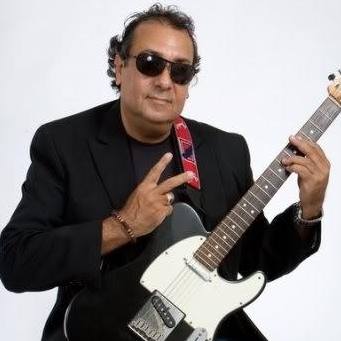


Every generation of Haitian music has its own version of the same vow: I will not die poor doing this. It’s been whispered by compas legends who watched their biggest records get bootlegged on cassette in the 1980s, and it’s being declared out loud again by the industry’s newest wave — artists like K-Dilak, whose latest single “My Time” arrives less as a song and more as a statement of intent.
The Song: Patience Turned Into a Verdict
“My Time” is built around a theme that’s simple to state and hard to earn: the shift from waiting to arriving. According to the artist’s own framing of the record, it moves through three connected ideas.
Patience and struggle. The song opens from a place of acknowledgment — naming the long wait, the grinding work, and the doubt that comes with pursuing a music career without guarantees. This isn’t a triumph song pretending the climb was easy; it’s built on admitting how long and uncertain that climb actually was.
Self-belief. From there, “My Time” pivots to conviction — trusting one’s own talent even when nobody else did yet, and staying grounded through the moments that would’ve justified quitting. This is the emotional hinge of the record: belief that had to exist before any external proof arrived to validate it.
The present moment. The final and most pointed theme is the rejection of “one day” as a concept. Instead of success being pushed into an indefinite future — the classic one day, things will change — the song plants its flag in the present tense. The wait is over; the moment isn’t coming, it’s here.
Structurally, that three-part arc (struggle → belief → arrival) is one of the oldest and most effective songwriting frameworks in music, precisely because it mirrors how real breakthroughs actually feel from the inside — not as a single lightning-bolt moment, but as the final beat in a much longer story.
Why This Theme Hits Differently in the HMI
A song about patience and self-belief isn’t unique to Haitian music. What is specific to the Haitian Music Industry is the weight “My Time” is carrying when an artist within that industry sings it.
The HMI has long operated with structural problems that have nothing to do with talent or effort: weak copyright enforcement that makes it difficult for artists to control or monetize their own work, management arrangements that have historically taken outsized cuts from performers with little leverage to negotiate, and digital piracy that lets a song travel across the diaspora — Miami, Montreal, Paris, Port-au-Prince — while its creator sees little to none of that reach reflected in their income. These aren’t abstract industry footnotes; they’re the reason so many of the artists who built compas, rasin, and Haitian hip-hop into globally recognized sounds spent their careers underpaid relative to their actual cultural footprint.
Against that backdrop, a young artist declaring “this is my time” isn’t just a personal statement — it’s implicitly a rejection of the pattern their predecessors lived through. It’s a generational line in the sand: I refuse to spend decades building an industry’s cultural capital while walking away broke.
What “My Time” Represents, Beyond the Track Itself
Whether or not “My Time” becomes a commercial breakout, its themes function as a kind of manifesto for where younger HMI artists want the industry to go: toward ownership, toward artists controlling the narrative and the economics of their own work, and toward treating “arrival” as something they get to declare for themselves rather than something a gatekeeper grants them.
That’s the real tension sitting underneath a song about patience and self-belief — it’s not just about one artist’s journey. It’s a reflection of an entire industry’s artists trying to make sure that when their own “one day” finally comes, they actually get to keep what they built.